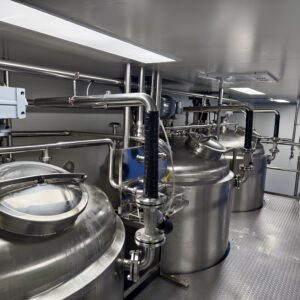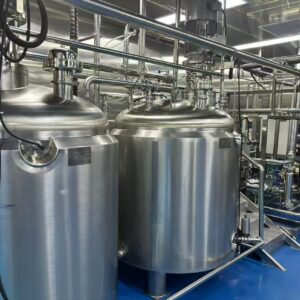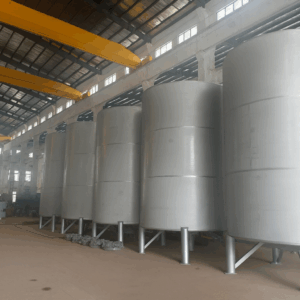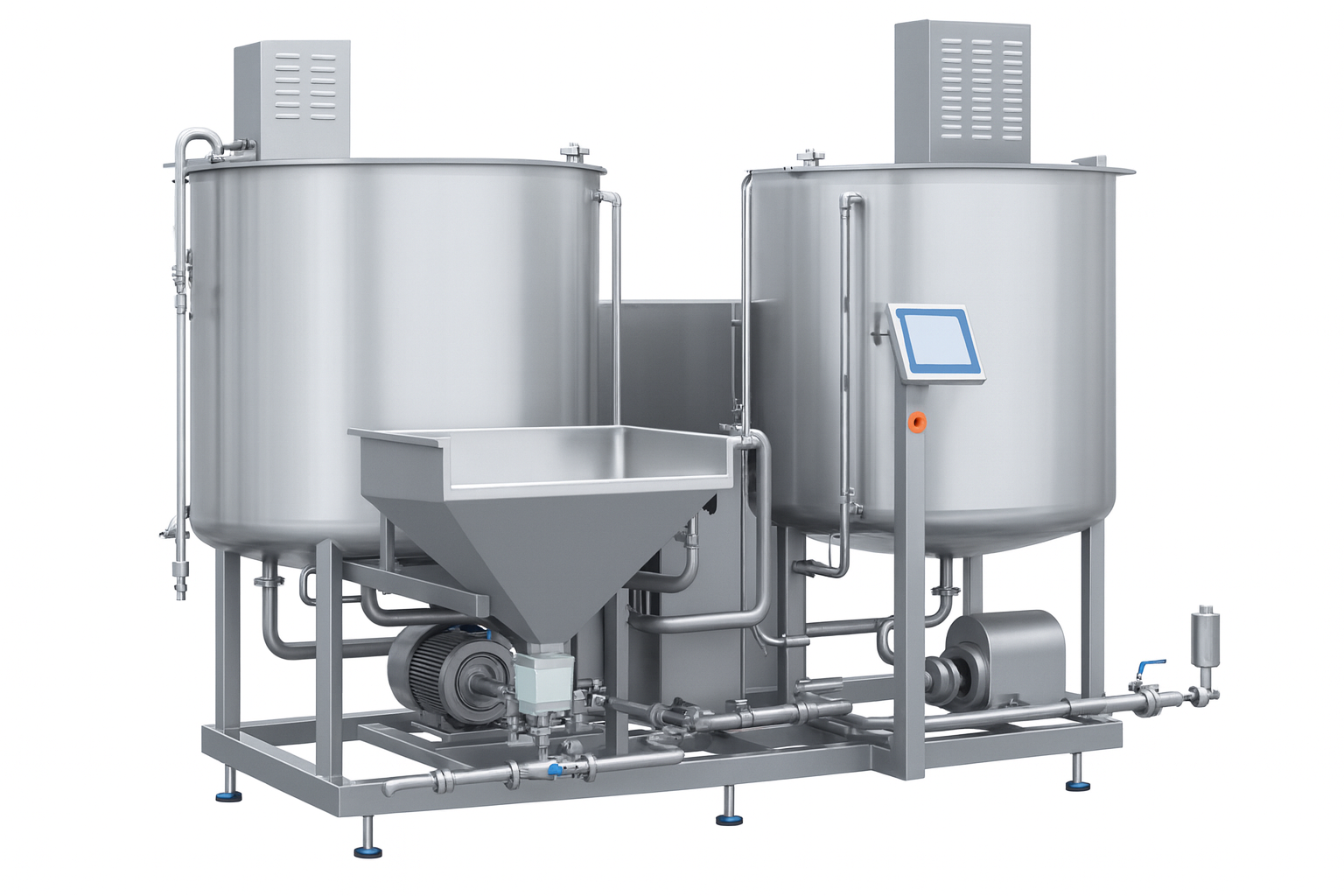
Our engineers provide specialized Brine preparation units using technology from the North American Oil and Fat Group
Brine preparation units are designed to efficiently dissolve solid salts into water to produce brine (saltwater solutions) with
controlled concentrations, tailored to specific industrial needs. Their working principle revolves around a systematic process of
mixing, dissolving, monitoring, and refining, ensuring the brine meets target purity and concentration requirements. Here’s a step-by-
step breakdown of their core operational mechanisms:
1. **Raw Material Handling: Salt and Water Input
The process starts with feeding two key raw materials: – **Solid salt**: Typically stored in hoppers or silos (e.g., sodium chloride,
calcium chloride).
Some units use automated feeders (screw conveyors or vibratory feeders) to meter salt into the dissolution system, ensuring
consistent input. – **Water**: Usually demineralized, softened, or potable water (depending on application) is pumped into the
system. Flow rates are controlled to maintain the desired salt-to-water ratio.
2. Dissolution: Mixing and Solubilization** The salt and water are combined in a **dissolution tank** (or mixing vessel), where the
salt is dissolved into the water. Key mechanisms here include: –
**Agitation**: Stirrers, impellers, or recirculation pumps keep the mixture in motion, breaking up salt particles and accelerating
dissolution by increasing contact between salt and water.
– **Temperature control** (optional but common): Many units heat the water (via jacketed tanks or inline heaters) to enhance
solubility—since most salts dissolve more readily at higher temperatures (e.g., NaCl dissolves faster in warm water). This reduces
dissolution time and ensures maximum salt uptake. –
**Residence time**: The mixture remains in the tank long enough to reach near-saturation, with design parameters (tank size,
flow rates) calibrated to avoid undissolved salt accumulation.
3. Concentration Monitoring and Adjustment** To ensure the brine meets the target concentration, the unit uses real-time
monitoring and feedback loops:
– **Sensors**: Density meters (e.g., Coriolis flowmeters), conductivity probes, or refractometers measure the brine’s
concentration. For example, conductivity correlates directly with dissolved salt content (higher conductivity = higher concentration).
– **Automated adjustment**: If the concentration is too low, the system increases salt feed or reduces water flow. If too high, it
adds more water. This closed-loop control maintains precision (often within Å}0.1–1% of the target).
4. Filtration and Purification** Undissolved particles (e.g., salt impurities, sediment) are removed to prevent clogging downstream
equipment (pumps, valves, or injection systems): – **Filtration**: Mesh screens, cartridge filters, or centrifugal separators capture
solids. For high-purity applications (e.g., food processing), fine filters (1–50 μm) ensure the brine is free of contaminants.
– **pH adjustment** (optional): In some cases (e.g., chemical processing), acids or bases are added to stabilize pH, preventing
corrosion or unwanted reactions in the brine.
5. Storage and Distribution** The finished brine is stored in a **holding tank** until needed, with recirculation pumps to prevent
settling or stratification (ensuring uniform concentration). From here, it is pumped to downstream processes (e.g., meat marination,
water softener regeneration, or oil well drilling) via pipelines.
6. Automation and Safety
Modern units often integrate PLC (Programmable Logic Controller) systems to automate the entire process—controlling salt/water
feeds, temperature, agitation, and filtration. Safety features include: – Overflow protection in tanks. – Alarms for low salt levels,
pump failures, or concentration deviations. – Pressure relief valves to prevent system overpressure. In summary, brine preparation
units streamline the conversion of solid salt and water into consistent, pure brine by combining controlled mixing, temperature
optimization, real-time monitoring, and purification—ensuring reliability for industrial applications like food processing, chemical
manufacturing, and oilfield operations.